anime review

All reviews written since I moved the blog to the wordpress platform. Default category.


Classical music orchestra is Serious Business!

As mentioned in the last review, Nodame Cantabile Finale is the fourth 2010 anime title reviewed here for the ongoing ‘Anime of the Year 2010’ audition. This anime is chosen specifically because I’m tired of seeing an application of a certain animation technique. Does this 2010 title utilized it just like the what the three other previous audition participant had? Or maybe should I worry about something far more important? Like the storyline, for example?


The two main protagonists of this anime, also the best of them all.

Story:-
After all the events in the preceding two seasons of this series, the two main protagonists are still doing their things in Europe. The main male protagonist conducts more orchestras while the main title female protagonist plays more piano. 13 episodes and plenty of omitted manga materials later, this anime ends, for good.

As a recap, in the first season, about 9 or 10 manga volume worth of materials was spread in 24 episodes with very minor omissions. The first season is so good it held the ‘Anime of the Year 2007’ title for more than two years, beating many illustrious challengers such as Tengen Toppa Gurren Lagann and Kaiji before being deposed recently by Bokurano.

For the second season, about 6 or 7 manga volume worth of materials were crammed into a pithy 12 episodes, with a little bit more omissions that in the first season. This has two effects; first the pacing of the second season is faster than in the first, way faster. Secondly, the fast pacing combined with the various omissions from the reference manga caused the storyline to be disjointed, therefore unable to develop and flow smoothly. The biggest problem that the second season has is not the quality of the storyline (the manga is excellent, one of the best I have ever read) but the method of adaptation and its presentation.

And for the third season reviewed here, few things has changed. The episode count is still limited at 12 (13 if the non-canon episode is also counted) and whatever manga material that is still left unaired are crammed into them. But this time, the director slowed down the pacing by removing huge amounts of very important plots. The most striking example is the story arc that sees the main title female protagonist meeting with the main male protagonist’s father, who is also a pianist just like her. This directorial maneuvering helps improve the pacing and the development of the remaining storyline, at the cost of quality.

This sir, is not acceptable.

Regardless of the fast pacing and somewhat incoherent plot flow that plagued the second season, its story is still good and awesome. That’s why the second season scored 8 out of 10, which is a respectable score around this part. Even the previous 3 participants of the currently running ‘Anime of the Year 2010’ audition doesn’t score that high. The sacrifice of storyline quality for a better presentation IMO is not worth it. For those who doesn’t read the manga and only watched the anime, the improvement in presentation should be worth it though because the remaining plot-lines that survived the wrath of the director were executed and storied very well. The solid yet awesome ending is a good example of it.

Character developments continues very well in this third season, but if the arc about the main male protagonist’s father is not completely omitted, could have been better. That missing arc would have helped advanced the main male protagonist even further. The saner pacing in this final season also helps the developments of other dwellers in Nodame’s apartment. The best characters remains the two main protagonist of course.


Barging into the shower while the main male protagonist is still inside is our heroine's specialty.

Character Design:-
My comments from the first season still applies. They are as excellent as ever and a positive aspect for this anime.

Voice Acting:-
My comments from the first and second season still applies too here. In other words, a positive point for this anime.

Music:-
The music in the third season has recovered from the minor blip that happened in the second season. The OP theme and OST are great as usual, and the ED theme is the best song theme that this series could ever have. A positive point for this anime.

Animation/Direction:-
While Mr. Director Chiaki Kon is definitely a destroyer of franchises, at least he is sane enough to not use that abhorrent blurry animation technique I have mentioned in the previous three consecutive reviews before this one. Animation in this anime is still as slick as ever, with virtually no fast-scenes and choreography that I can comment on whatsoever. That is probably why Mr. Director doesn’t use it in this anime.

Mr. Director really dropped the ball with his decision to omit major story arcs out from the final season of this series. He would have done better if he just stick to repeat what he has done in the second season, if following the footsteps of the director of the first season (not Chiaki Kon) is too hard for him. But then again, not using the animation technique that I hate is very good decision too.

Conclusion:-
7 out of 10
. Currently the best anime reviewed in the audition to date, despite the fact that both Arakawa Under The Bridge and Baka to Test to Shoukanjuu also scored the same amount of points. 6 anime titles left to review…


Attempts by the main male protagonist to do the same doesn't work though.

Shortlink: http://wp.me/prgSo-eZ


The main protagonist and his SLR-toting sidekick. Both of them are perverted and are the best characters in this anime.

The third review in the audition to choose the first winner of the ‘Anime of the Year 2010’ title will be for Baka to Test to Shoukanjuu, which on the surface is very similar to the previous anime reviewed here Mayoi Neko Overrun!, therefore comparisons between these two 2010 anime titles is inevitable.


A fair description of his classmates, and to a lesser extent, his schoolmates too.

Story:-
Due to unforeseen circumstances with a busty naïve maiden during the placement exam that took place at the start of the school year, our dumb-ass main protagonist was assigned into the 2nd year F(ail) class. There he meets again with the said maiden and predictably, he fell in love with her. But the class also consists of many dumbasses just like him, and they are of little help when it comes to the school’s unique event: Examination Summoning Battle or ESB (abbreviated this way from now on), which can be used to raise the class’ status.

This anime starts very strongly with its very unique and seemingly promising storyline, up until maybe 3 or 4 episodes. When the whole class was banned for 3 months from participating in the ESB event, this anime started to peter out slowly towards the ending. Then the two-phase ending arc starts at episode 11 and this anime accelerates full-throttle onwards and downwards into the chasm of mediocrity.

The ending of this anime is even worse than the crappy ending Mayoi Neko Overrun! has. It was even more retarded than the main protagonist himself. Despite the regression that happened after this anime’s strong start, the pacing of this anime is pretty much spotless before the ending. Then this anime do the reverse of what Evangelion 1.0 You Are (Not) Alone has done: sharply increasing the pacing of the presentation dramatically by cramming more ESB events in the ending arc (more ESB events than the previous 10 episodes combined). Plus, the final ESB event is very stupidly retardedly and maddeningly predictable. You can see how it will end from a million miles away, and if you don’t, then the main protagonist is smarter than you.

Whoever wrote the ending is either running out of ideas or purposely tried to insult the viewers’ intelligence. I suspect it was the latter. I really do. Honest! And it doesn’t even provide a smooth transition towards the already-announced second season!

While the general storyline itself is just average (albeit a little bit better than the one in Mayoi Neko Overrun!), some of the subplots are great. This anime is a better harem and comedy than Mayoi Neko Overrun, but similarly crap in romance department. Some of the potential relationships in this anime are not pursued in more detail though, such as the relationship between the main protagonist and his Class A boyfriend (picture below). This anime needs more episodes, and I hope the second season will provide more of them so that the various subplots can be explored more.


The main protagonist's boyfriend!

The low episode count combined with larger characters cast than Mayoi Neko Overrun! ensures that character developments are less than optimal than it should be. This anime is a case where the rate of development is proportionate to the amount of airtime that a character got, with some exceptions. One of the best characters in this anime is the main protagonist, which is a given due to his airtime. But an exception should be given to another interesting character in this anime, which is the camera-toting pervert. He is simply awesome (like the silent handphone-toting character in Sayonara Zetsubou Sensei series) even with far less focus on his character.

This anime also made references to other anime/manga/TV shows/games ranging from Gundam to Dragon Quest. Of course, it wasn’t as much as the rapid-fire Sayonara Zetsubou Sensei series though.


Yet another The Scream painting spoof in Japanese anime.

Character Design:-
Character designs in this anime is excellent, especially for its non-female characters. It is not to say that female character designs are bad (they are better than the ones in Initial D or Hayate no Gotoku for instance) but the male character designs are on another level. One glaring exception is the main protagonist, but I will overlook this one because the others are awesome. That bishounen character who has a twin sister in Class A is definitely the best of them all, overly so. A positive aspect for this anime. Better than Mayoi Neko Overrun! and even Arakawa Under The Crazy Bridge.

And I’ll even ignore that severe lack of black hairs in this anime too. Bishies trap is awesome!


Above is our hot-blooded main protagonist favorite food that he likes to 'eat'.

Voice Acting:-
In general, voice acting in this anime is good but not great, better than Mayoi Neko Overrun! too. There are no outstanding voice acting gig(s) in this anime, and in this part, this anime is inferior to Mayoi Neko Overrun!

Music:-
A complete opposite compared to Mayoi Neko Overrun!, only the 2nd ED theme is not good. Everything else, from the OST all the way to the 1st OP/ED themes are good. A positive aspect for this anime.


Epilepsy Attack! Japan need to stop using this regressive animation technique sharpish! Did all 2010 titles uses this technique?

Animation/Direction:-
I’m slapping the STOP THAT BLURRY ANIMATION TECHNIQUE NOW! tag and docked one point from this anime’s final score. Click on that category link and scroll down to previous reviews under this category to see why this category exists. This technique are only used in fast-paced scenes though, just like Mayoi Neko Overrun and unlike Arakawa Under The Bridge.

Meanwhile, animation quality in this anime is good, even in fast-paced scenes (ignoring the said technique above). Choreography in this anime is just average though. The directing, while not perfect, do experiment with some rarely-used presentation methods.


A storytelling technique more common in the Western world literature than in Japanese manga/anime.

Conclusion:-
7 out of 10.
The next anime that will will be reviewed is the long-delayed final season of Nodame Cantabile. I particularly choose this one hoping that the aforementioned animation technique above is not present in it. The first two installments doesn’t have it, therefore I’m praying that the third one is also the same.


The unbreakable friendship between these two like-minded best characters in this anime is the cornerstone of the storyline.

Shortlink: http://wp.me/prgSo-eQ


The indecisive main male protagonist, dragging down this anime with his indecision.

The audition to select the first winner of ‘Anime of the Year 2010’ title continues with my review of Mayoi Neko Overrun!, an anime where cat-girls doesn’t exist. There are lots of real cats though, which are not relevant to the storyline in any way. The bar set by the first entry in the audition is not that high but can this second entry of the audition surpassed it?

Story:-
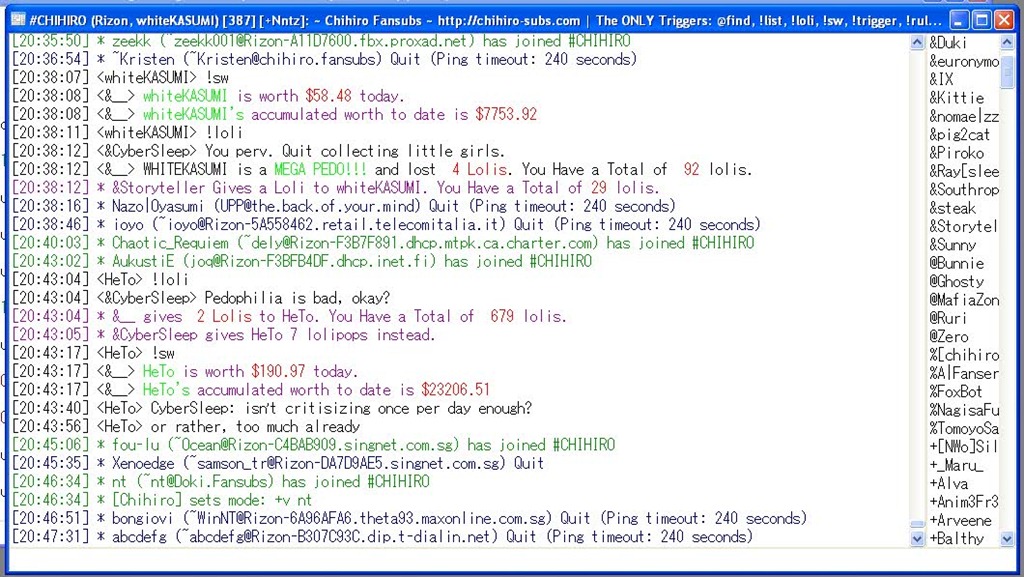
Our main protagonist is a high-schooler who runs a middling cake shop while his foster sister, the true owner of the shop, is nowhere to be found. The business is bad, thanks to the uselessness of the part-timers that worked under him in the cake shop. His love interest doesn’t help matters either, as she shouts abuse at him 95% of the time (in addition of being equally inept as the protagonist’s subordinates). In the verge of bankruptcy, his sister reappeared alongside a mysterious girl who says ‘Ni’ ‘nyaa’ (that the main protagonist’s sister got by typing ‘!loli’ in #chihiro@irc.rizon.net).

!loli

This anime is similar, at least in form, to Gosyusho-sama Ninomiya-kun reviewed here a long time ago, but with a crappier story and no supernatural elements. This anime has three phases: first phase involves the main protagonist meeting the mysterious girl (the title protagonist) who has some emo issues that need to be solved. In the second phase, this anime pulled an Index where the title protagonist was relegated as a secondary character while the whole main regular cast are doing their things episodically (mostly lame things but the Saki rip-off in episode 8 is one of the best parts this anime has). In the final phase a.k.a. the ending, this anime pulled another Index where the title protagonist reappeared to take a major part in the finale. The problem is, the dual-purpose ending sucks donkey asses.

IMO, this anime is pointless. What is the reason this anime was written anyway? Is it to see a romantic relationship developing between the main male protagonist and his childhood friend? If so, at the end of this anime the arc ends up inconclusive (still-friends neutral relationship between them). Is it to focus on the title protagonist (like Naruto is, and what Index should have been)? If so, her lack of character development due to the second part of this anime ensures that this particular story arc doesn’t go anywhere, even with the ending that focused on her. Is it to showcase the harem relationship between the main male protagonist and the other three regular female characters? If so, the indecision of the main male protagonist in choosing which character he wants to sleep with ruins the arc. Is it all of the above? Well, three failures doesn’t make one success story isn’t it?

ANN has classified this anime as a harem romantic comedy. This anime failed in the first two keywords, but somewhat successful with the third one. The humor in this anime are good overall. Not up there with Jungle Wa Itsumo Hale Nochi Guu standard, but still good. This anime also make some references to other anime/manga, notably the aforementioned Saki in episode 8, and has the first ever One Piece parody I have ever seen.

The lethargic second phase of this anime messed with the pacing of the storyline (if you can guess which one it is), and also affects the overall character developments in this anime. Only two characters survived the damaging second phase, and that would be the main male protagonist and the rich girl. The latter is the best character in this anime mainly because she is a prominent figure in the second and final phase of the anime, therefore she has the highest rate of development here. The main male protagonist also has some decent (but lesser than the rich girl’s) character development, while the title protagonist only has a minuscule amount of them due to the final phase. The less said about the main female protagonist who are stagnant from the start until the end of this anime, the better.

Unlike Arakawa Under The Bridge, no second season has been announced for this anime yet. And I think things should be kept that way.


The best character in this anime, working hard to keep this anime up.

Character Design:-
Character design in this anime is your bog standard shounen genre designs with big eyes. The female characters doesn’t have any black hairs that is supposed to be common in real-life Japan. The main protagonist has it though. He is probably the only real Japanese in this anime cast.

Voice Acting:-
Voice in this anime is just average overall, but strangely for me I am drawn to the performance of the voice actress for the main female protagonist. Shouting your lines 95% of the time sure work some wonders.

Music:-
This anime has a near total failure in this aspect. Only the parody OP theme in episode 7 is decent. Everything else, from the official OP/ED themes and the OST are forgettable.

Animation/Direction:-
This anime is yet another title that uses the blurry animation techniques I have already mentioned before, and with this blog entry, the third consecutive titles that has it. I’m making a new blog category for this awful phenomenon that seems to have become increasingly common nowadays in Japan’s anime industry. Does all 2010 anime titles (or maybe majority) uses this technique? Thinking back in time, the first half of Fullmetal Alchemist: Brotherhood doesn’t use this technique either, only the second half (all aired in 2010) having it in spades. Unlike Fullmetal Alchemist and Arakawa Under The Bridge though, this anime doesn’t use the technique in normal scenes, only in fast-paced ones. Still, one point will be deducted from the final evaluation as I have done with the past titles that has it, and will do so too in the future.

The usage of the blurry animation technique is not the only problem this anime faced. One of the very first things I noticed when I started watching this anime is that the character animations are very jerky in fast-paced scenes. And unlike the blurry animation techniques, the jerky character animation problems also happened sometimes in normal scenes too. This is weird because general animations for non-character objects (such as cars or the helicopters etc.) are excellent even in fast–paced scenes. Integration between 2D animations (that is not character animations) and CGI animations is excellent too, definitely the best implementation I have seen to date.

Choreography is nonexistent in this anime, and that’s understandable. The directing could have been better, but they has done a better job than their counterpart in Ninomiya-kun.


This anime has far better rain effects than the amateurish pitiful job in Fullmetal Alchemist: Brotherhood.

Conclusion:-
5 out of 10.
Worse than the first candidate Arakawa Under The Bridge. I wonder whether the first ‘Anime of the Year 2010’ will win the title with a 10 out of 10 score. As an added insurance, I will add another 2010 title into the audition lineup, titled Durarara. That makes it ten 2010 anime titles that will compete for the title, with two of them already being reviewed. So what’s next? I’ll keep that a mystery!

Shortlink: http://wp.me/prgSo-eC